How to Build a Paycheck Buffer: The Mechanics

A paycheck buffer is not a savings goal, it is a timing fix. Here are the three stages, the sizing rule, and the switchover day nobody describes.

A paycheck buffer is not a savings goal, it is a timing fix. Here are the three stages, the sizing rule, and the switchover day nobody describes.

Your employer sent it and your bank does not show it. Here are the three separate clocks that decide when a direct deposit lands and becomes spendable.

Your bank shows two balances and neither is the money you can safely spend. Here is what sits between them and how to read your account in the right order.
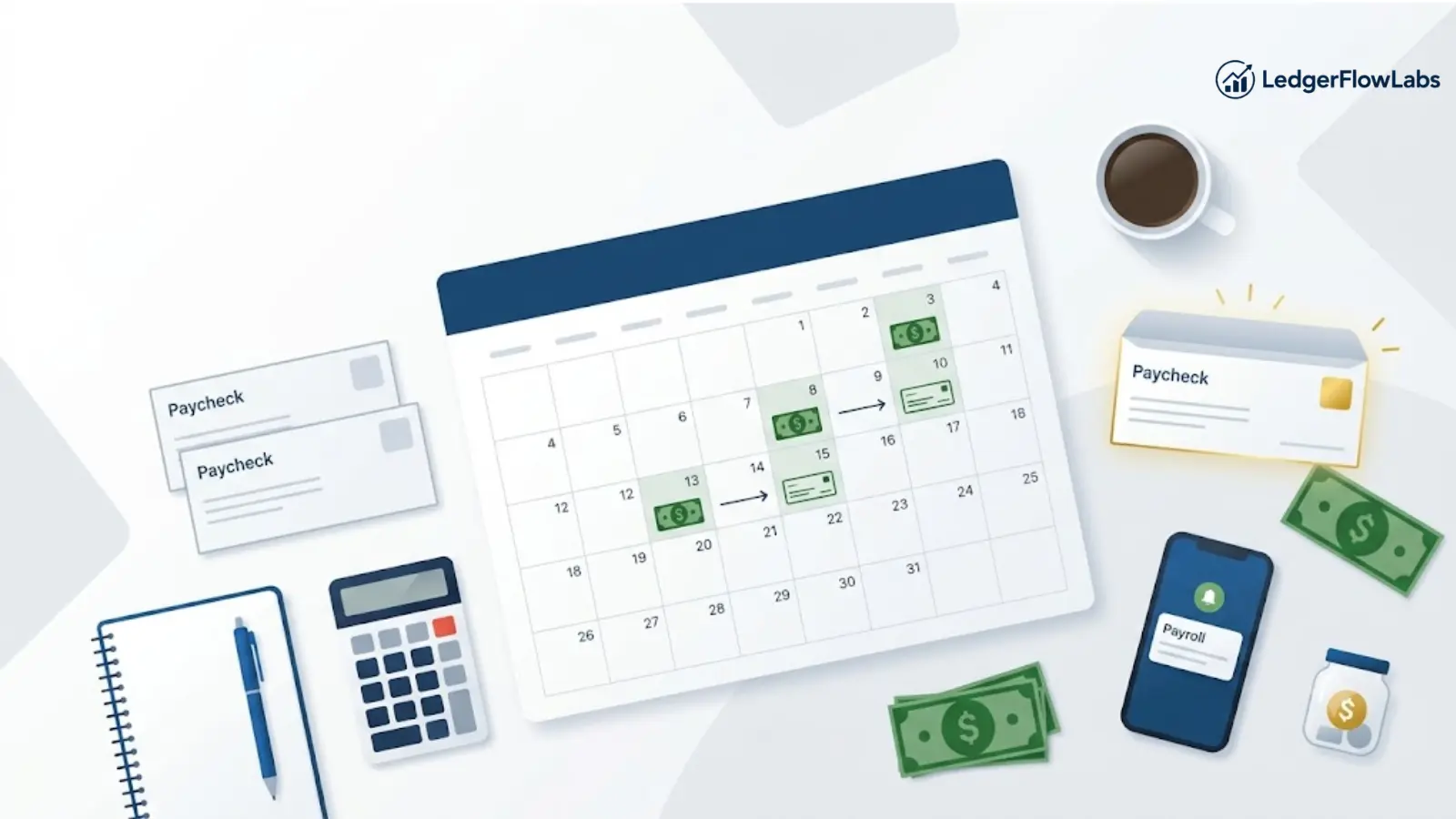
Three-paycheck months depend on your own pay dates, not a fixed calendar. Here is how to find yours and why the extra check is a correction, not a bonus.
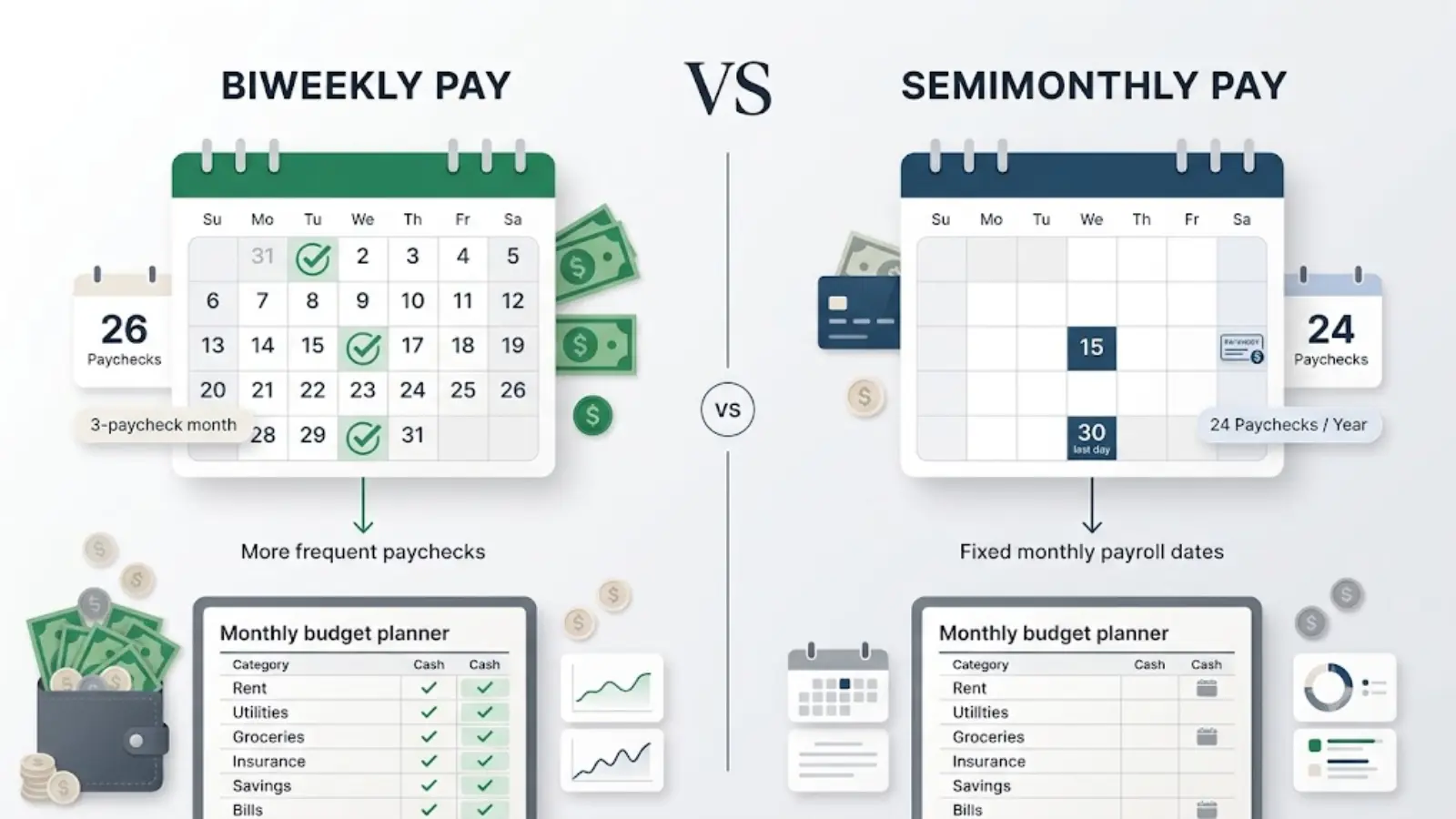
Biweekly means 26 checks, semimonthly means 24. Here is what each schedule does to your month, and why one of them never lines up with monthly bills.
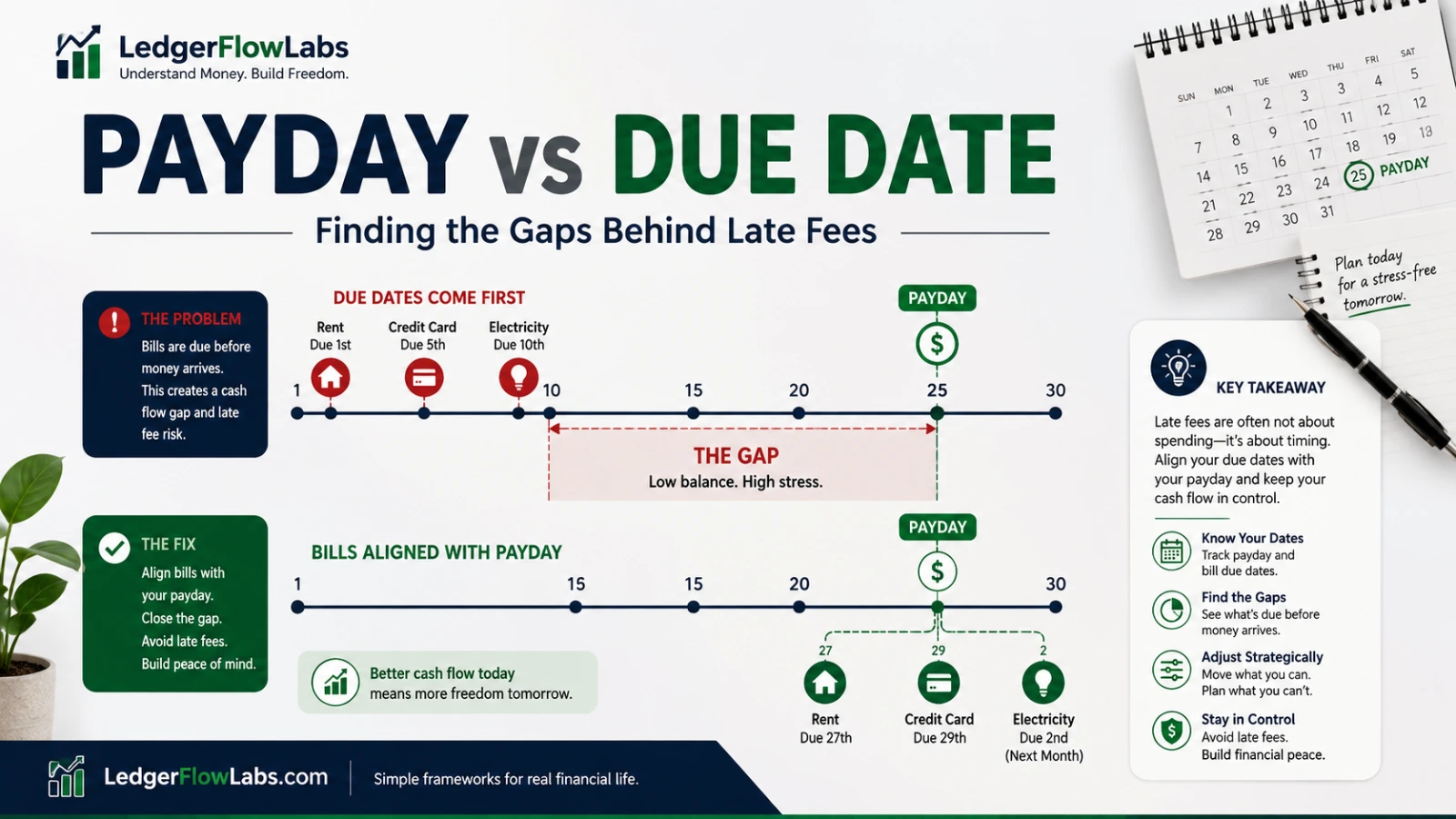
Put your pay dates and due dates on one timeline, find the negative stretches, and learn why moving every bill to just after payday backfires.
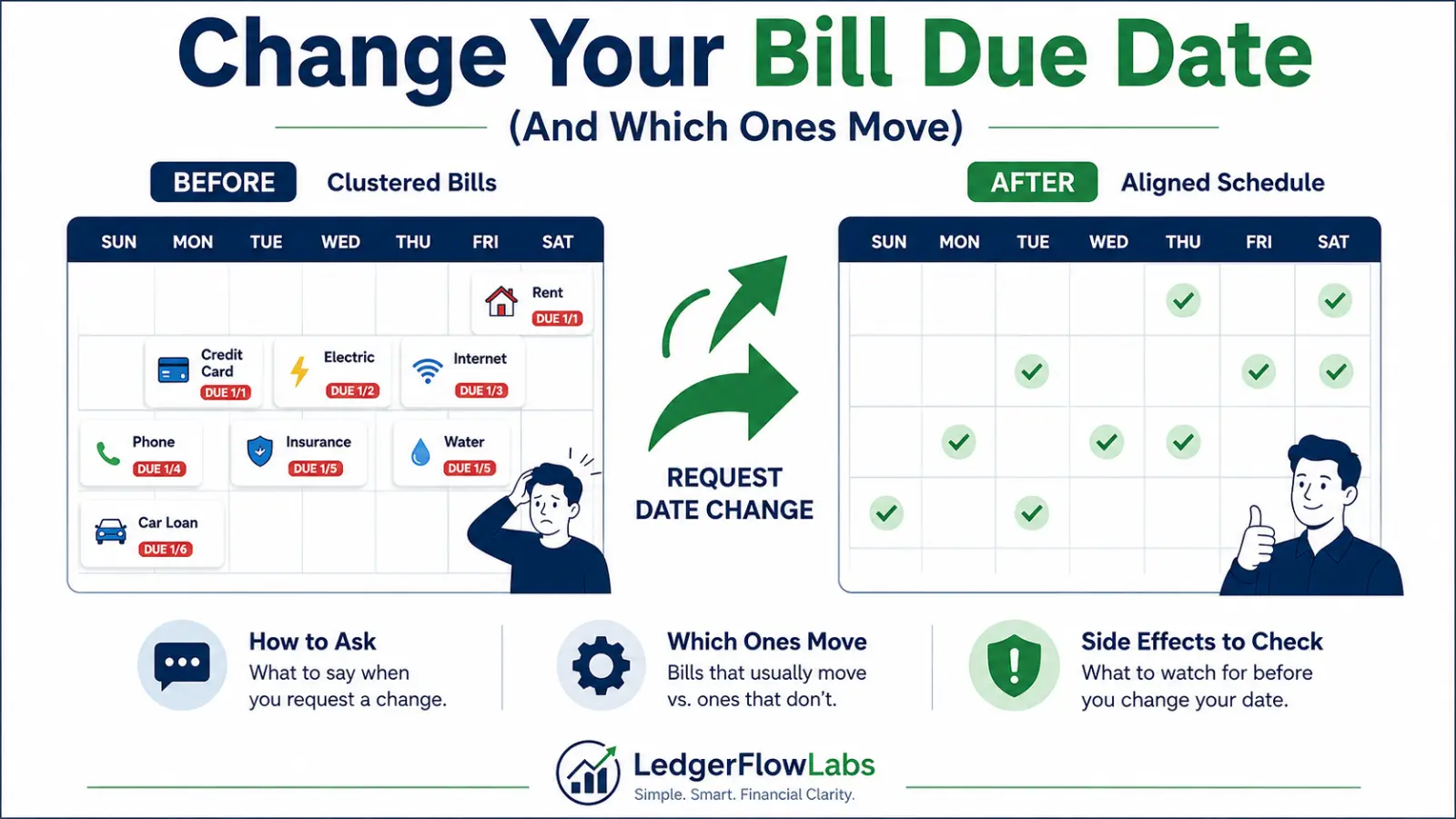
You can often ask a provider to move a bill due date. Here is which bills usually move, what to say, and the transition bill that catches people out.

A bill calendar turns scattered due dates into one timeline. Here is how to find every date, including the ones you cannot remember, and keep it current.
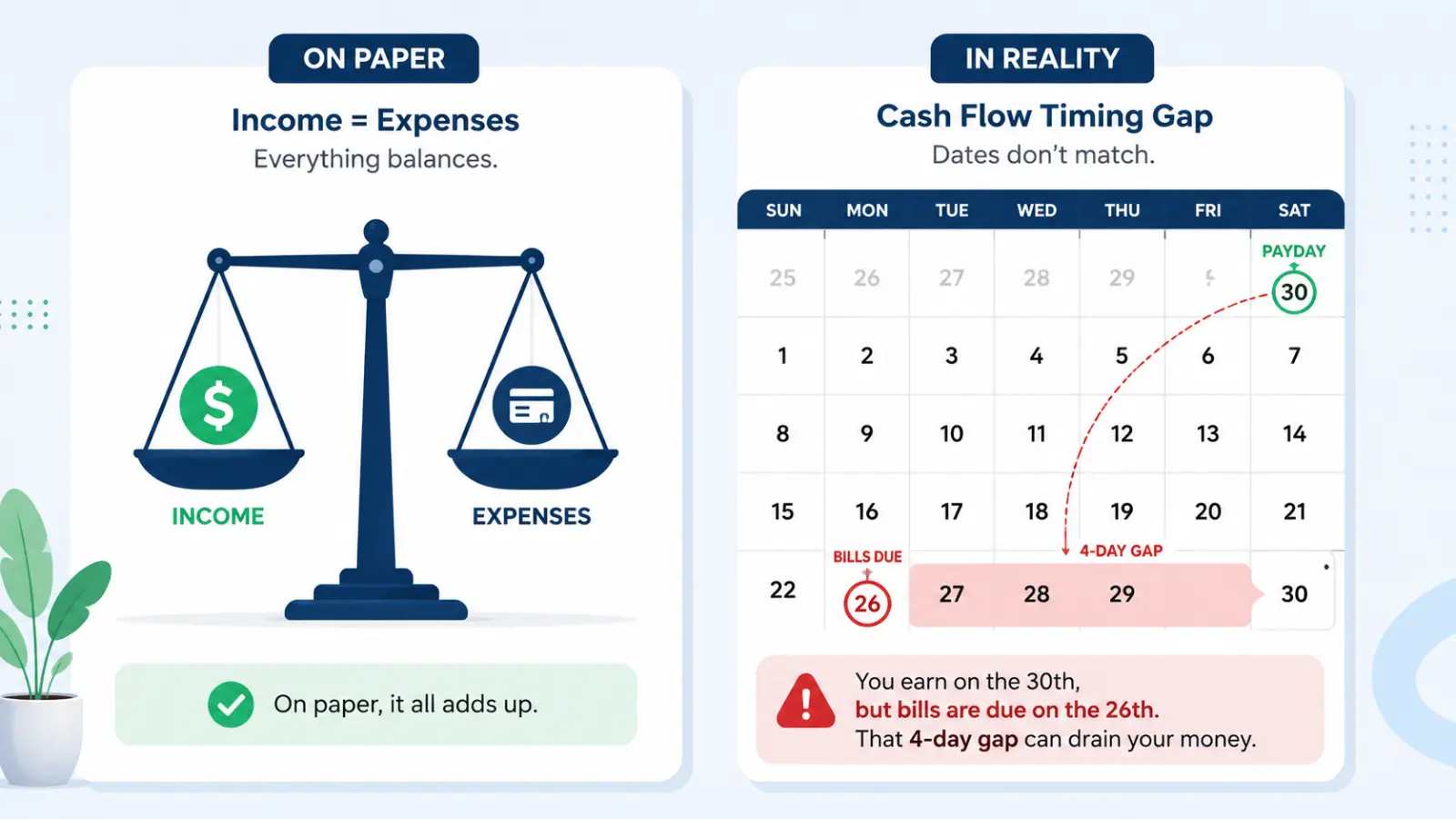
Running out before payday is often a timing problem, not a spending one. Here are the three calendar mechanics that drain an account that should balance.