When Is a Payment Actually Late? 3 Different Clocks
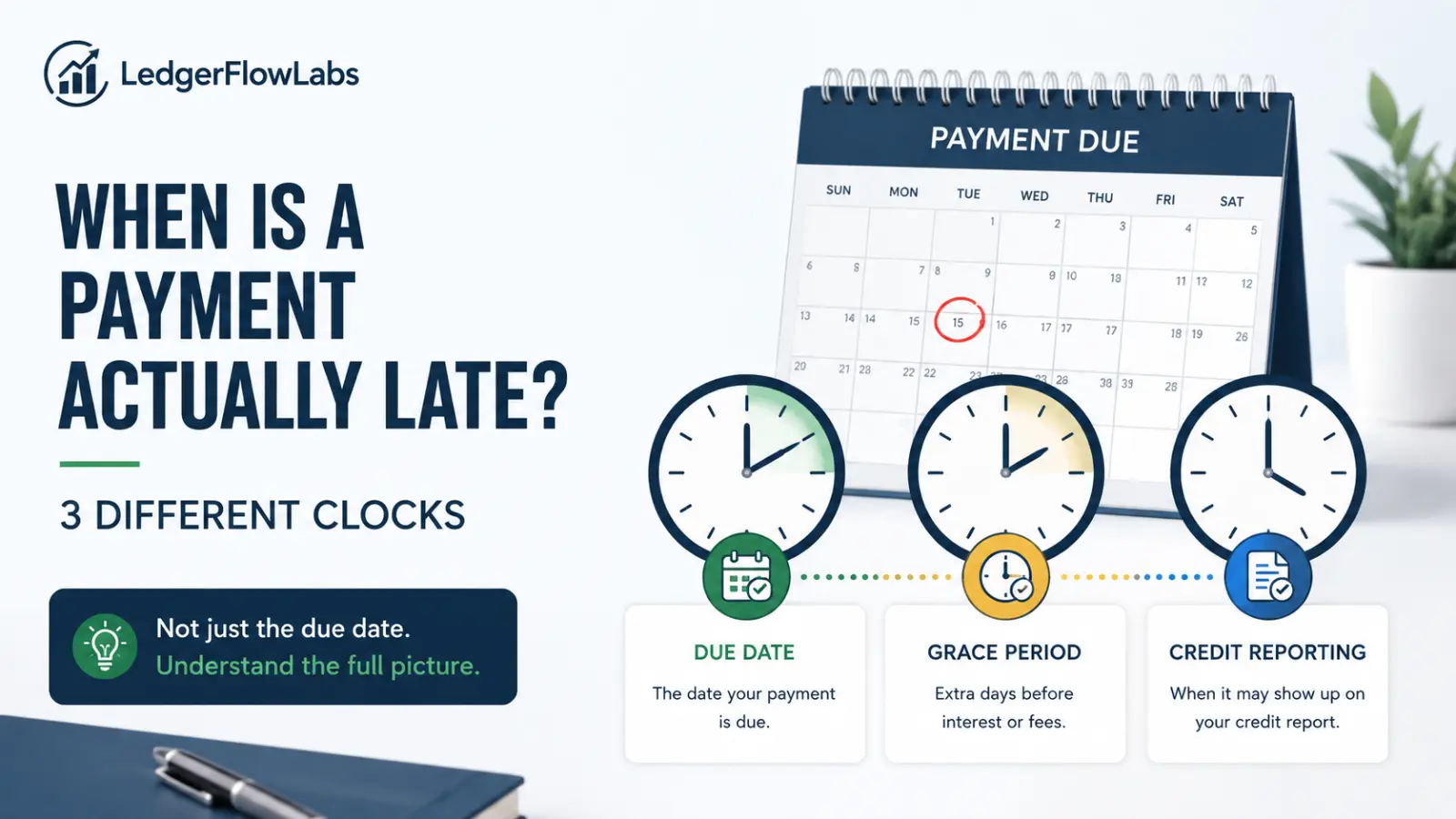
A payment is late at the due date, not at 30 days. Here is what US rules say about the grace period, the late fee and credit reporting, clock by clock.

A payment is late at the due date, not at 30 days. Here is what US rules say about the grace period, the late fee and credit reporting, clock by clock.
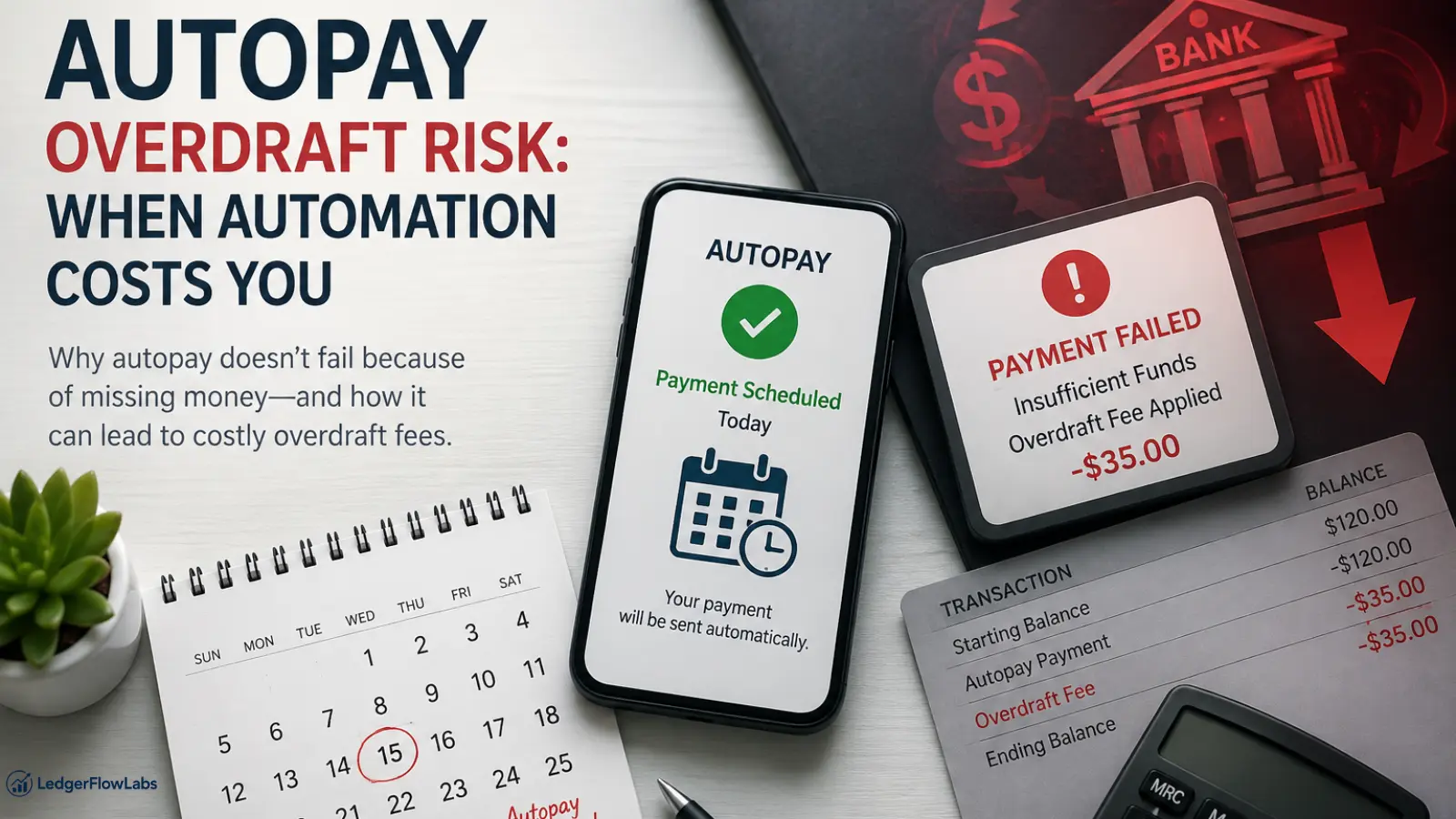
Autopay on the due date is the riskiest date you can pick. Here is how same-day posting order, retries and pull-versus-push payments create an overdraft.

Your employer sent it and your bank does not show it. Here are the three separate clocks that decide when a direct deposit lands and becomes spendable.

Your bank shows two balances and neither is the money you can safely spend. Here is what sits between them and how to read your account in the right order.
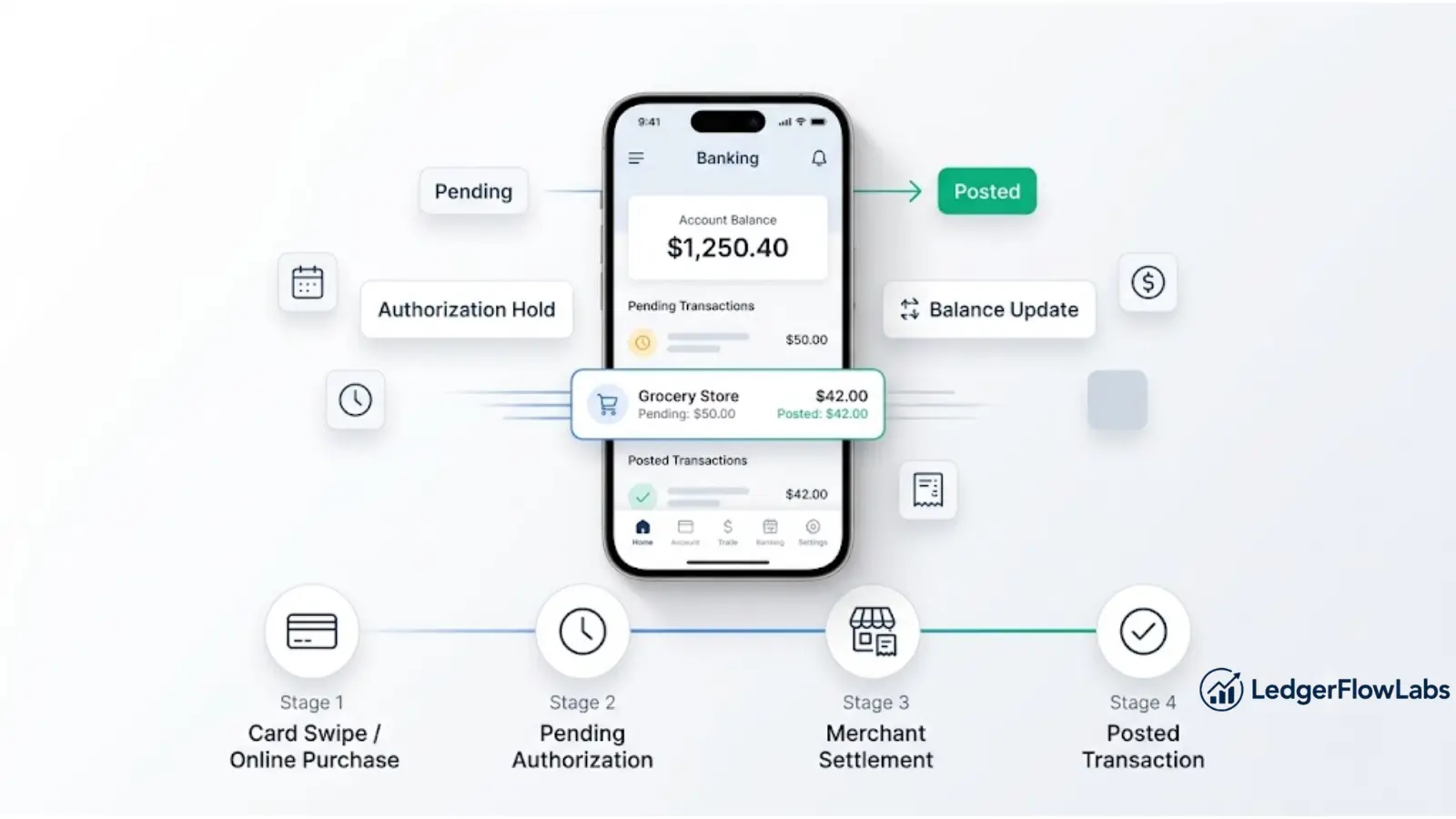
A card charge passes through four stages before it is final. Here is the timeline, why the amount changes, and why pending is not proof a bill was paid.