How Amortization Front-Loads the Interest on a Loan
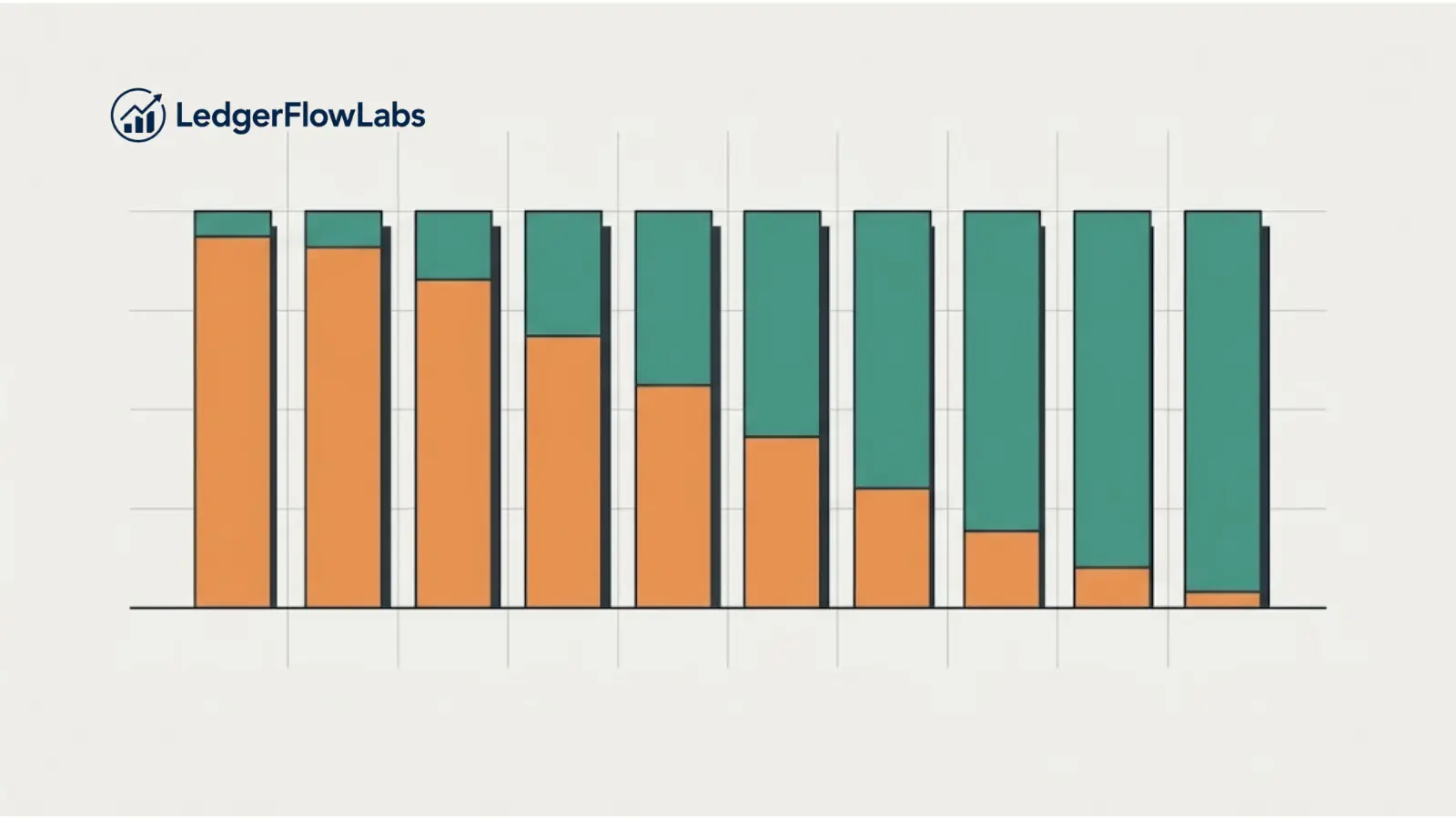
Nothing is front-loaded on purpose. Interest is charged on the balance, the balance starts large, and a level payment does the rest. Here is the sum, month by month.

Nothing is front-loaded on purpose. Interest is charged on the balance, the balance starts large, and a level payment does the rest. Here is the sum, month by month.
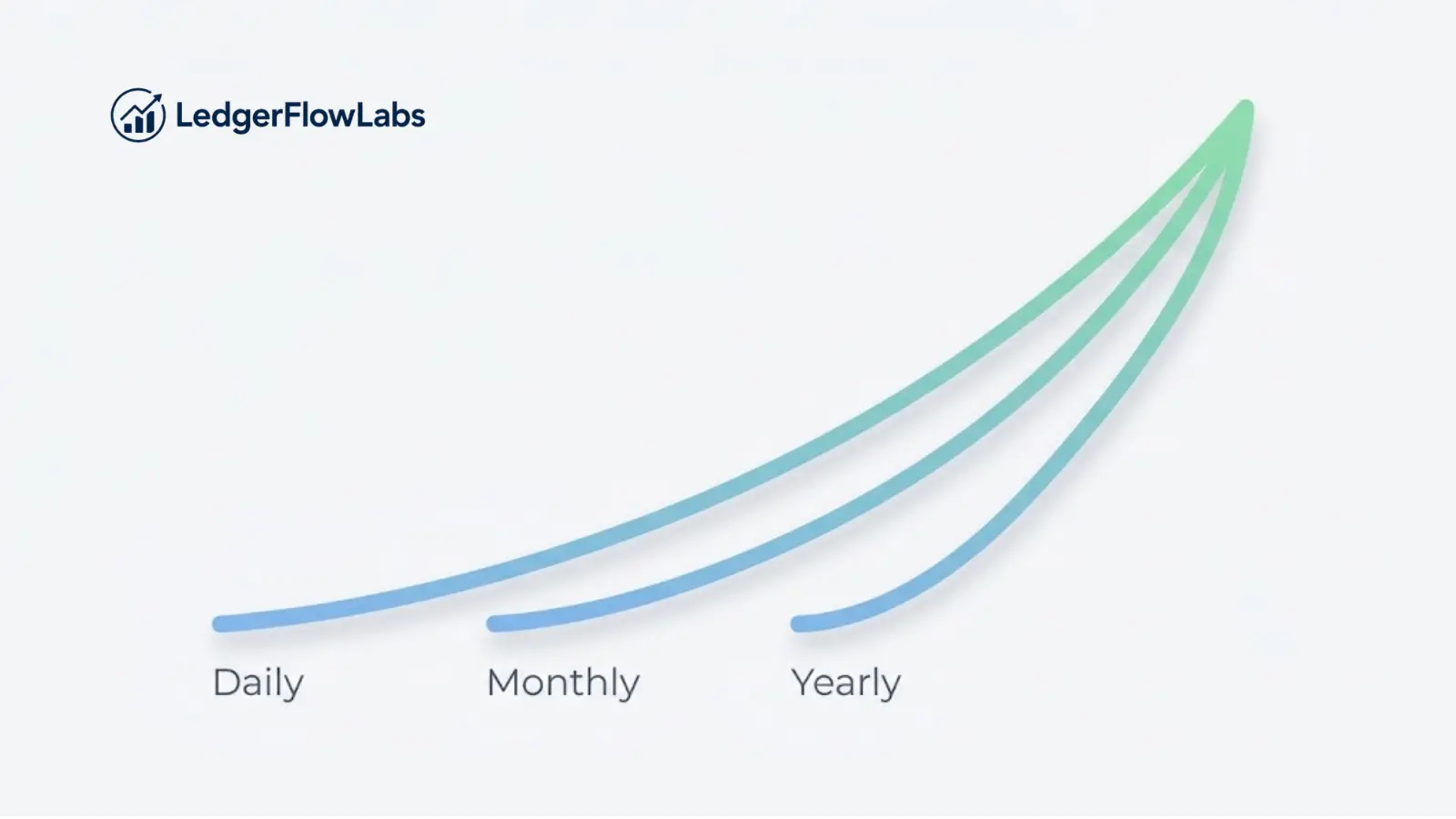
Same rate, three frequencies, three answers. The arithmetic, why the gap is smaller than people expect, and the one disclosed figure that has already done the sum for you.
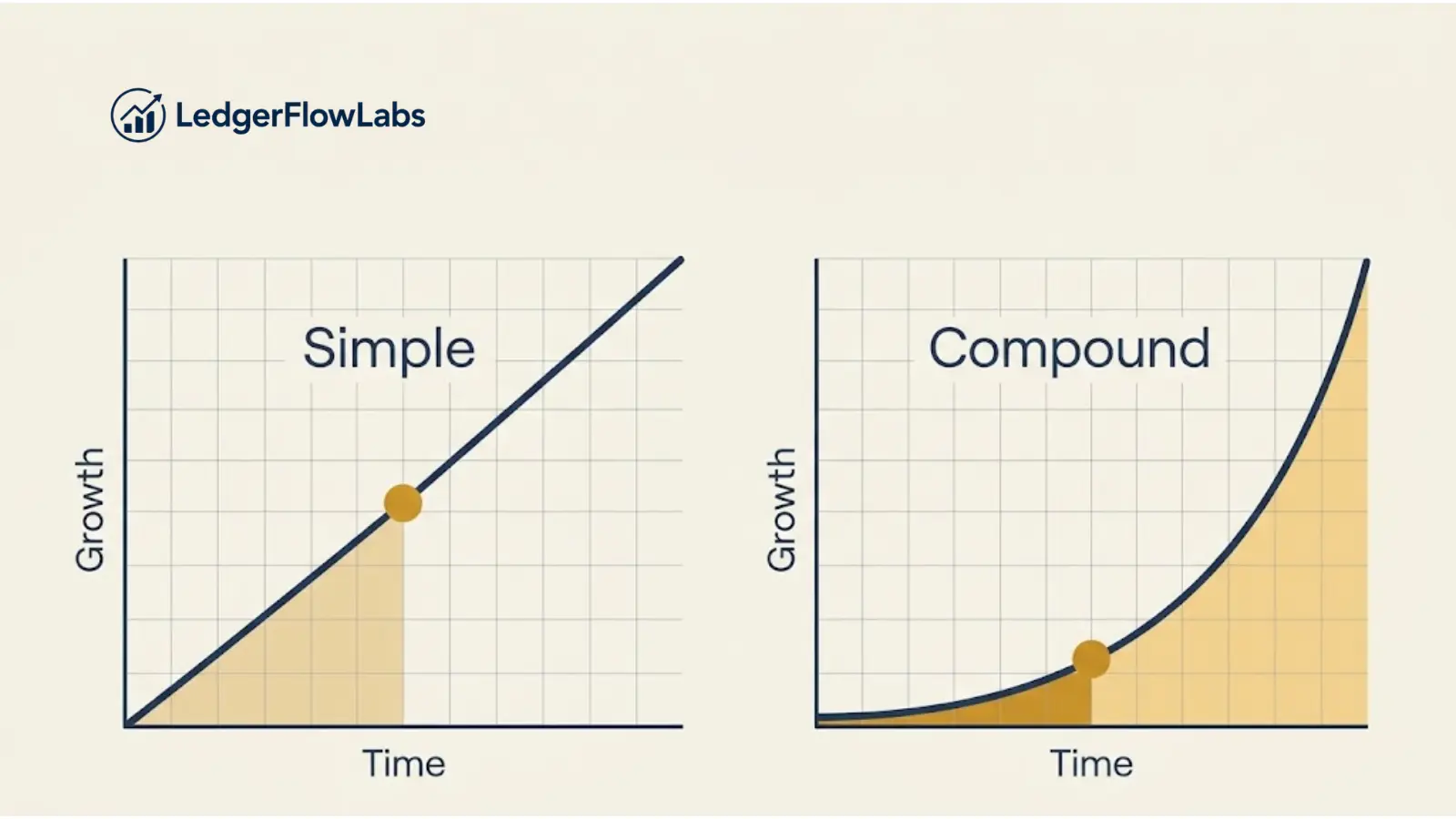
One formula multiplies and the other stacks. Here is the sum side by side, and the regulation that decides which of the two words is on any figure you are shown.

The grace period disclosure in Regulation Z is written about purchases. A cash advance is a separate balance with its own rate and its own fee, and the rules say where to find both.
You paid it down mid-month and the charge barely moved. Here is the arithmetic that explains why, and the two rules that require your issuer to tell you which method it uses.
Two nearly identical words defined in two different regulations. One ignores compounding by design and the other exists to include it. The definitions settle it.

Your statement is required to print the answer for your own account. Regulation Z puts a minimum payment warning and a repayment estimate on the page. Here is how to read it.

Rate, balance and time are the three inputs, and the balance is the one nobody explains. Here is the arithmetic, and the rule that puts every input on your own statement.

You did the arithmetic and the money is not there. That is a real finding, not a failure. What the number means, what a shortfall usually is, and where free help lives.

A raise is gross and your deposit is net. Four things sit between them, three of them scale with pay, and one of them is a rate the IRS publishes. Read your own stub.